Piano Delivery on Shiply: What You Need to Know
Pianos are the classic “awkward item”: too heavy for normal couriers, too valuable to trust to chance. The good news is that piano delivery via Shiply works well — because the platform has a solid core of genuine piano specialists who bid on these jobs every week. Here’s what you need to know before listing yours.
Shiply is a London-based transport marketplace (operating since 2008) where you describe the job and independent movers compete for it. For pianos, that competition includes both general furniture movers and dedicated piano specialists — and telling them apart is the whole game. The platform basics are in how Shiply works.
Upright vs grand: why it changes the job
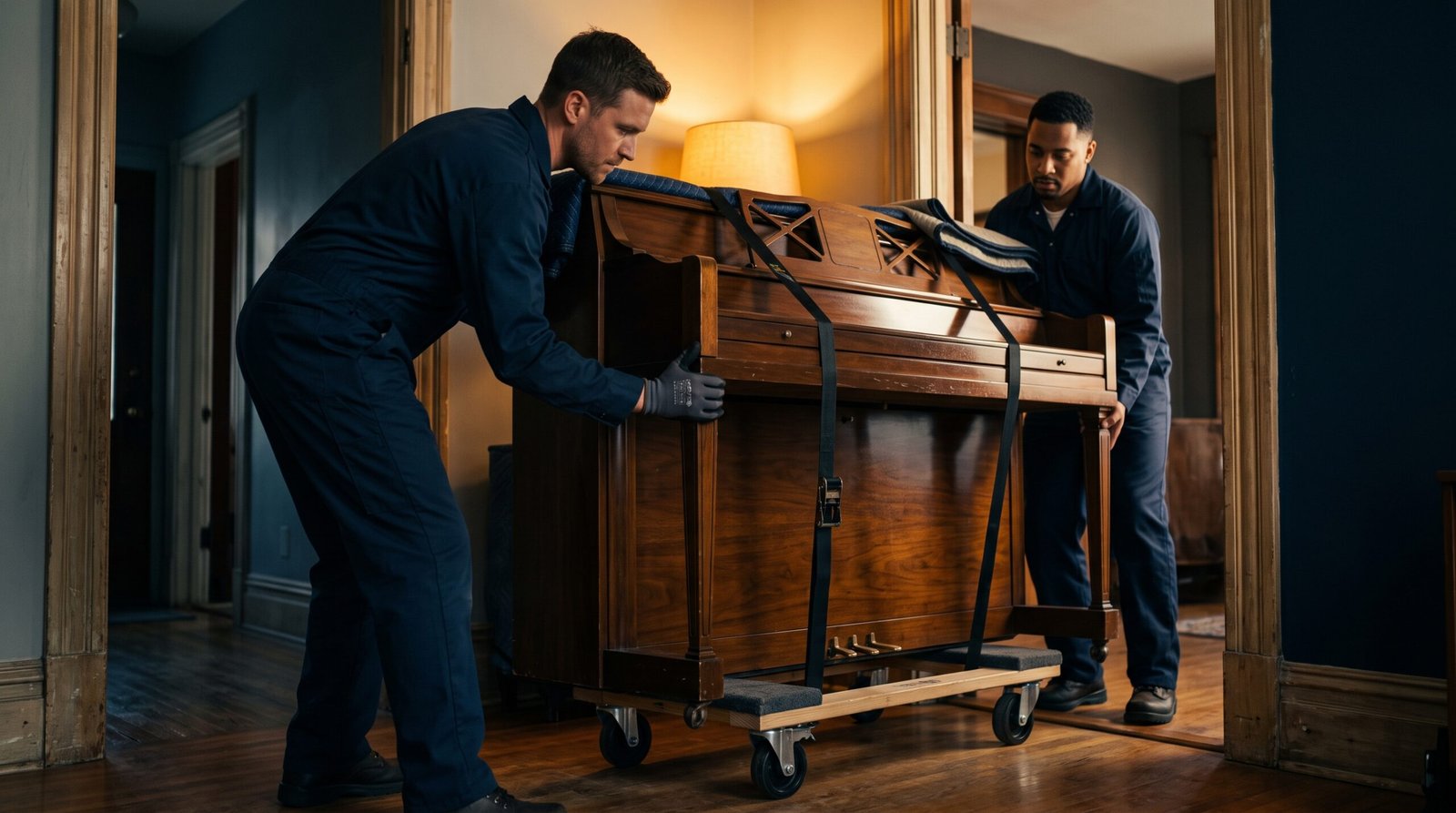
- Upright pianos (typically 200–400kg) are the bread and butter of piano moves. Two experienced movers with proper equipment handle most uprights, including stairs, without drama.
- Baby grands and grands (300–600kg+) are specialist territory: they usually need partial dismantling (legs and pedals off), a piano skid or trolley, and a crew that has done it before. Expect meaningfully higher quotes — and be deeply suspicious of cheap ones.
- Digital pianos are just heavy furniture. Don’t pay specialist rates for one; list it as furniture delivery instead.
What to include in your listing
Piano quotes live or die on detail. Include: the exact type (upright, baby grand, grand) and make/model if known; approximate weight or dimensions; the full route including floor levels at both ends (“first-floor flat, one flight of 12 stairs, no lift”); doorway widths and any tight turns; and clear photos from several angles. Specialist movers read these listings carefully — a detailed one signals a serious customer and attracts serious bidders.
How to spot a real piano specialist
- Feedback history. Look for bidders whose reviews repeatedly mention pianos specifically — not just “great mover”. A dozen piano mentions beats a hundred generic ones.
- Equipment. Ask what they use: piano skids, stair-climbing trolleys, heavy-duty straps, protective covers. Vague answers are a red flag.
- Crew size. Uprights need two experienced people minimum; grands need three or more. A lone bidder with a van is not a piano mover.
- Insurance specifics. Pianos are high-value and fragile. Ask for the per-item cover limit in writing — standard goods-in-transit policies sometimes cap below a decent piano’s value.
Piano delivery on Shiply: what it costs and how to list
Auction pricing means no fixed rates, but the market has rough bands: local upright moves often land in the £150–£350 range; longer-distance uprights more commonly £300–£600; grands start higher and climb with distance, stairs and complexity. These are observations of typical winning bids, not guarantees — your quotes depend on the specifics. One reliable lever: flexible dates let specialists slot your piano into existing routes, which is where the best prices come from.
Stairs, access and tuning
Two practical points beginners miss. First, stairs multiply cost and risk — a ground-floor-to-ground-floor move and a third-floor move are different jobs, so document every step (literally) with photos. Second, your piano will need retuning after the move regardless of how carefully it’s handled; the jolts of transport knock strings out. Budget £60–£100 for a tuner a couple of weeks after delivery, once it’s acclimatised.
The specialist process for grand pianos
It’s worth knowing what a proper grand piano move looks like, so you can tell whether a bidder actually does this work. The legs and pedal lyre come off first (labelled and wrapped separately), the piano is carefully lowered onto its side onto a padded piano skid, strapped securely, and moved on a stair-climbing trolley or by a trained crew using proper lifting technique — never dragged, never tilted casually. At the delivery end, the process reverses, and the instrument is reassembled and positioned before the crew leaves.
Ask shortlisted bidders to describe their process in a sentence or two. Genuine specialists answer fluently and specifically; general movers give vague reassurances. Also ask how they protect floors and doorframes — a careful crew brings floor runners and door protectors as standard, because a 500kg instrument will mark anything it touches.
Frequently Asked Questions
Can Shiply move a grand piano?
Yes — grand piano moves are listed regularly, and genuine specialists bid on them. Be meticulous in the listing (type, weight, stairs, access photos) and prioritise bidders with specific grand-piano feedback over the cheapest quote.
How much does piano delivery cost on Shiply?
It varies by type, distance and access, but local upright moves often win bids in the low hundreds of pounds, with grands and long distances costing more. Listing is free, so the accurate answer for your piano is whatever the auction returns.
Will the movers take the piano upstairs?
Specialist piano movers handle stairs routinely — it’s a core part of the job. But you must declare every flight in the listing and confirm with the winning bidder beforehand. Undisclosed stairs are the number one cause of piano-move day chaos.
Is my piano insured during the move?
Only if the mover’s policy covers it — confirm the per-item limit in writing before booking. Shiply itself is a “neutral venue” and doesn’t insure your goods, so this check is on you. For valuable instruments, verify the cover matches the piano’s worth.
Do I need to prepare the piano before collection?
Close and lock the lid (or ask the movers to secure it), remove any loose items from the top, and clear a path at both ends. The movers handle the wrapping and equipment — that’s what you’re paying the specialist for.
Moving a piano? Request your move here with full details and photos, and let piano specialists compete for it — or sanity-check anything in our Shiply Help Desk forum.